
Sometimes we know where we want to go, sometimes we don’t. And that’s how the journey begins.
In the whirlwind of everyday pursuits, the rush itself can lose sight of its very reason for being. At some point, some professionals feel the need take stock. Why this sense of going in circles, despite consistently delivering ‘beyond expectations’ results? Why this fatigue and the impression of having lost inspiration?
Well-intentioned advice from family and friends, full of common sense, often gets set aside or lost amid pressing urgencies. Even the daily workout, once a refuge and a safety valve, no longer truly clears the mind, bringing more aches than fresh perspectives. And although health is generally good, medically speaking, all indicators are green and the doctor says, ‘everything is fine, nothing to worry about,’ there remains a certain inner unease, a subtle necessity seeking expression: a feeling of being stuck, occasional but surprising bursts of anger, a form of ‘stress’, or even a desire to escape, to change something, to be somewhere else, to reclaim one’s own purpose and meaning.
At the Crossroads
After the heady air of reaching professional peaks and years spent successfully coping with chronic fatigue, perhaps fueled by the relentless drive for growth, comes a moment, often at a professional crossroads, to step back, lift one’s gaze, and look around, to see who one has become.
Sometimes, it feels like the end of a first life cycle, whether at 39 or 71. After several decades of social and professional experience, marked by milestones such as founding a family or establishing a career, a new chapter begins to beckon. There is a renewed drive to live, to seek freedom within the human community, and to grasp one’s destiny with both hands, for we do not have eternity before us, only life (Benameur, 2011).
An inner call begins to question: What if we have been trapped in our own assumptions? What if we have overlooked something essential, beyond our professional roles, absent from all job descriptions? What if we have gradually become a caricature of the organizational culture we helped shape?…
Revolutions usually begin within.
Could it be possible to escape the market-driven spiral that infiltrates even one’s daily life, seeing the world only through the law of supply and demand, and reconnect with a more human, grounded law of needs and resources? (Hamant, 2024, p. 139)
It may be time to step away from the long-standing identification with the efficient machine that began during the Industrial Revolution, where humans are said to ‘function,’ to ‘change software,’ to ‘no longer have enough bandwidth’, and instead dare to quit ‘operating in automatic mode’ (Hamant, 2025, p. 32).
Questions accompany life, prompting movement, change, and action. They suggest the possibility of an ending, allowing the emergence of a potential new beginning.
The Starting Point
The starting point often involves something one has but does not want, or something one lacks but wishes for, essentially a conflict. Conflicts can pile up on top of each other and exist on multiple levels: a conflict between the person and their circumstances, or between them and others; an internal conflict linked to opposing desires or motivations; or even deeper conflicts: “What do I actually want? Am I really working toward what I desire? Are there internal barriers holding meback?” (De Haan & Burger, 2014, p. 86).
Perhaps more than ever, in this era of ultracrepidarianism (Villain, 2020) — where opinions proliferate on every subject and are broadcast relentlessly — bragging and shameless assertions generated, words with approximate meanings, “alternative facts,” and even striking images distort our perception of reality and our connection to it. Gradually, confusion spreads like a silent tide (a poetic metaphor suggested by ChatGPT-5, which “works beautifully — it carries rhythm, imagery, and a subtle sense of inevitability”). Self-confidence erodes, until even the most intimate decisions are delegated to flattering yet opaque algorithms that shamelessly disregard privacy. Do we not too easily accept the semblance of logic at the cost of a distorted truth?
Professionals may sense that familiar “quick fixes” no longer suffice, neither to address their current challenges nor to shed light on questions arising from failures or, perhaps paradoxically, from success. Not every question can be dealt with satisfactorily through KPIs.
It is in this uncertainty, in not knowing what to do, that professionals begin to pay real attention. As the poet David Whyte observes: “Just as people lost in the wilderness, on a cliff face or in a blizzard pay attention with a kind of acuity that they would not have if they thought they knew where they were. Why? Because for those who are really lost, their life depends on paying real attention. If you think you know where you are, you stop looking.” (Whyte, 2009, p. 88)
A Different Conversation
Increasingly, professionals feel the need for “a sanctuary where they can reflect on their work, and professionals have higher and higher expectations of such a sanctuary. What they want is a good conversation – a conversation that helps them to think things through systemically and understand them better, to reinforce the connection between themselves and their context, and to help them tackle things differently and more effectively the next time.” (De Haan & Burger, 2014, p. xiv)
Knowing when to stop is resisting the logic of the gears fueled by our automatisms, which ultimately reduce possibilities to a single option: following the tracks already laid. Anyone who aspires to something beyond retreating into their convictions and seeks to free themselves from certain habits, the risk of which can sometimes be significant and lead to a blind acceleration into a wall, would do well to apply the brakes and come to a stop.
Stopping, however, is not enough. To open new paths and embark on a viable trajectory, it is necessary to dare to modify and mobilize the network of connections in which one operates, thereby breaking the habits that confine one’s actions. True transformation occurs through interactions, by reshaping the relational fabric that structures decisions and behaviors (Hamant, 2024, pp. 164, 175).
It all begins with a pause on words. We name things without always realizing how much certain words colonize our minds, reinforce our beliefs, and prevent our emancipation: The first unavoidable stop for transformation is the stop on words (Hamant, 2024, p. 168).
A new kind of dialogue then becomes possible: a conversation with oneself, reflected through one’s relationship with another, to explore how one’s personal history resonates in the present and how one’s beliefs already shape the future.
At this stage, some professionals turn to organizational coaching to broaden their perspectives and gain clarity in navigating complex and uncertain situations. Coaching helps them consider new options, anticipate potential pitfalls, reduce the likelihood of missteps, and approach challenges with greater insight, ultimately sharpening their awareness to act more thoughtfully and less reactively.
In initial meetings, unspoken thoughts and feelings often surface subtly. Clients are sometimes surprised by what emerges as they evaluate their situation and motivations. The emotional and the rational coexist, not always processed and fully articulated, as curiosity and apprehension intertwine around what their own words might inadvertently reveal about themselves.
Organizational Coaching
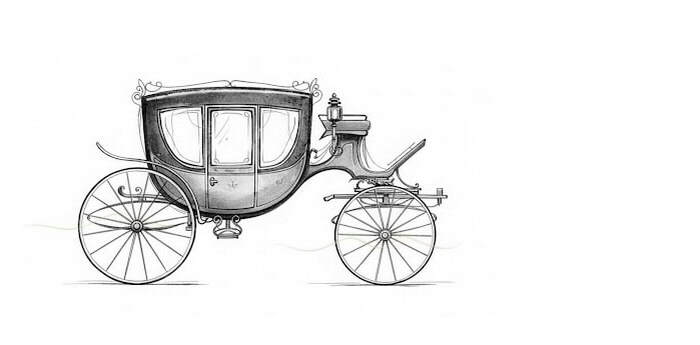
Originally, the word coach referred to a horse-drawn carriage, a means of transport for longer or shorter journeys. Over time, it evolved metaphorically: to accompany a person or group from where they are to where they wish to go.
Today, regardless of the application, theoretical method, or approach, all coaching practices can ultimately be traced back to this general definition. A framework is ultimately the path chosen by a practitioner: a way of acting that reflects their character and sensitivity. Without it, coaching becomes a hollow technique, rootless, mechanical, and merely an avoidance of self-confrontation, incapable of fostering genuine connection and meaningful change (Jung, 1963a, p. 100).
More specifically, organizational coaching—whether executive or leadership coaching—has over time become a lever for both individual and collective transformation. It represents a personal and unique learning journey, grounded in work- and organization-related experiences, and provides a relationship-focused process through which meaningful change can occur. Rooted in a deep understanding of psychological and organizational dynamics and enriched by practical corporate experience, organizational coaching catalyzes and facilitates necessary evolutions within the complex web of professional relationships.
Organizational coaching fosters autonomous learning: the client remains the owner of the process and has to experience it in person (De Haan & Burger, 2014, p. 159).
Beyond Individual PerformanceThis is not to deny or diminish the importance of ambition, the human drive to excel, pursue challenging goals, and earn recognition; nor to downplay the role of competition and confrontation, neither the importance of measuring oneself against others, especially in the first half of life. After all, in a tournament, there is only one winner; in a race, only one pole position; and in most organizational charts, usually only one CEO. Yet today, organizational coaching extends beyond individual performance. It addresses the relational and contextual realities of industries, considering the specific structures, cultures, implicit rules, and preferences of each organization, factors that shape what is valued, tolerated, and rejected.
Organizational coaching is therefore not only coaching of an individual professional but also of the organization itself, because the organization is present in and expressed through every professional (De Haan & Burger, 2014, p. 169).
Leveraging the Unmeasurable
Organizational coaching, especially when drawing on systems psychodynamics, integrates attention to both the individual’s inner world and the organization’s relational and systemic dynamics. Organizations are seen as emotionally charged spaces that evoke hopes, anxieties, desires, and tensions, resonating with the experiences of the people within them.
This approach considers not only objective data and measurable realities but also to less visible dimensions—subjective perceptions, emotions, and qualitative insights—that often influence decisions, behaviors, and relationships unconsciously (Obholzer, 2006). To paraphrase Freud’s conviction, free will is not master in its own house, and the human psyche is not confined to reflective consciousness. Much of our thinking and motivation lies outside direct awareness, subtly guiding behavior (Laborit, 1985), like the persuasive and unquestioned injunctions of an internal GPS.
When psychic existence is ignored, its manifestations tend to be projected, onto others, into relationships, onto the organization or “the system,” and at times even outward into the sky… In this way, early humanity may have discerned echoes of the soul in the stars, giving birth to astrology… (Jung, 1963c, p. 36).
By recognizing and working with these internal signals, new pathways to action open up, more attuned to personal, professional, and organizational realities. This perspective also clarifies why certain projects fail despite their quality, or why seasoned professionals may act in ways that appear “irrational,” including ourselves: “The sort of ideas we attend to, and the sort of ideas which we push into the negligible background, govern our hopes, our fears, our control of behavior. As we think, we live” (Whitehead, 1938, p. 87, cited in McGilchrist, 2021, p. 377).
On the Road
Organizational coaching shaped by systems psychodynamics invites exploration of both the existential and practical aspects of work and leadership (Lewis, 2024):
- Who am I in this organization?
- What thoughts and emotions underlie my reactions?
- What implicit roles do I play?
- What unspoken dynamics shape our team interactions?
- Which shared beliefs and anxieties influence decisions or avoidance?
The aim is not therapy, nor over-psychologizing, but creating space to reflect, regain meaning, and act with clarity. While not intended as treatment and cure, this learning process, when it nourishes one’s skills and capacities, can generate therapeutic benefits: greater joy, deeper satisfaction, and even enhanced happiness in life (Brower, 2021).
“As a man is, so he sees”, wrote the poet William Blake in a letter about Heaven and Hell in 1799 (Blake, 1982, p. 39). More recently, neuroscientist Iain McGilchrist observed: “Who we are, then, determines how we see. And how we see determines what we find.” (MGilchrist, 2021, p. 67).
Attention changes the world.
Toward Trust
The goal is no longer, nor exclusively, to arrive first, but to embody one’s roles with self-awareness, allowing greater freedom of movement. This involves expressing one’s unique strengths and vulnerabilities, shifting from external validation to internal alignment, and reconnecting with one’s own agency, even in the absence of certainty or guaranteed success (Kets de Vries, 2025). The journey thus becomes a space for genuine presence, integrity, and accountability, rather than solely the pursuit of a defined endpoint.
As hypotheses emerge, they sometimes take the form of open questions, inviting the client to generate their own insights and bring forth the meaning seeking expression within (Legrand, 2008, pp. 201–204). By attending to recurring themes that gradually reveal themselves, the dialogue allows revisiting both successes and trials, weaving the thread of experience into the present. Recognizing previously unacknowledged qualities enables one to more fully assume the impact of their actions on others and to perceive their own value with greater clarity.
Admitting one’s dreams, aspirations, doubts, faults, or guilt to oneself or to another is a profound act. Confession to oneself often has little effect; confession to another, however, can be transformative (Jung, 1963a, pp. 107–108).
Through repeated conversations, the coaching relationship allows reliability and trust to develop gradually, while the client confronts expectations: those they hold for themselves and those they place on others. Inevitably, they also encounter frustrations and disappointments, which can sometimes provoke aggressive impulses: What was this aggression attempting to achieve? What function did it serve?
Motivations and aspirations progressively gain prominence in the relationship. As they are felt and recognized, they can be addressed: Do they facilitate or hinder decisions and actions?
Simultaneously, the inherent risk of trusting others becomes both more realistic and more bearable. Trust can unfold more freely, encompassing trust in oneself, trust in others, trust in relationships and trust that one inspires in others, a precious human resource essential not only for organizational effectiveness but also for professional and personal fulfillment.
Dynamic Stability
Organizational coaching becomes valuable and meaningful when it remains grounded in lived experience, welcoming what may be uncomfortable to say or hear and holding tensions that are both contradictory and interdependent, with the potential to give rise to creative as well as destructive impulses. When these forces are acknowledged and integrated rather than repressed, they can generate more intense and fruitful activity instead of cancelling each other out (Billeter, 2021, p. 96).
This dynamic stability (Hamant, 2024) gives the relationship the capacity to navigate the fluctuations and turbulences of both inner and outer reality without imploding, without endlessly repeating habitual patterns, nor swinging to extremes.
The coaching relationship thus cultivates a quality of robustness (Hamant, 2024), that is, the ability to withstand shocks or disruptions without deteriorating, by enduring and adapting — comparable to a reed that bends without breaking.
To create a dancing star, one must still have some chaos within oneself, wrote Nietzsche, addressing both humanity as a whole and the intimate sphere of those who dare to question their own certainties (Nietzsche, 1971, p. 29). Acknowledging and navigating this chaos is essential, whether it manifests as a hidden order or as an unpredictable, erratic, and bewildering disorder. It calls for attention to what unfolds in the unspoken layers of rational discourse, while sustaining enough inner calm to face the violence of chaos without resonance, absorption, or retaliation. At the same time, the coaching process must have the strength to establish protective boundaries that shield against the pull of limitless chaos.
Through co-deconstruction and co-construction, balancing curiosity, focus, discipline, and play, clients evolve: they change and gradually transform internally while moving with greater freedom and impact in complex organizational spaces.
Who Goes There?
Coaching creates an intermediate zone – “between two destinations” – where options can be explored and next steps prepared, away from the spotlight of organizational life: a transitional space where thought can unfold without judgment or urgency (Winnicott, 1971).
Decisions take shape as ideas and emerge gradually, through a process of integration that often begins in the body, then surfaces in consciousness, and eventually gives rise to action. This process may unfold almost instantaneously or stretch over minutes, hours, days and nights, months, or even years. While we are not masters of this gestation, we can foster, nurture, disrupt, or even abort it (Billeter, 2021, p. 35).
By shedding outdated roles and burdens that hinder momentum, clients regain agency and restore voice to forgotten parts of themselves.
Eventually, some may realize that meaning is not a destination or a target to be reached; it unfolds into being through a shared journey, when one travels together (Hamant, 2024, p. 132). Along the way, and to get there, the path brings disillusionments and revelations, presents trials that must be overcome, and reveals thresholds to be crossed.
No matter the strength of one’s intention, we cannot know what a being is capable of giving, enduring, investing, or creating, except in action (Perrone & Doumit-Naufal, 2024).
Ultimately, if it is essential to know where we are going, equally essential seems to be the question: “Who is going?” (Jung, 1963b, p. 241)
Perhaps this unveils the possibility of a fully lived life, in all its singularity, in constant dynamic balance, embracing and integrating both what has been and what is emerging.
References
Benameur, J. (2011). Les insurrections singulières. Arles : Actes Sud.
Billeter, J.-F. (2021). Esquisses. Paris : Editions Allia.
Blake, W. (1982). The complete poetry and prose of William Blake (D. V. Erdman, Ed.). London: Anchor Books.
Brower, T. (2021). Learning Is A Sure Path To Happiness: Science Proves It. Forbes, October 17. Disponible sur : https://www.forbes.com/sites/tracybrower/2021/10/17/learning-is-a-sure-path-to-happiness-science-proves-it/
De Haan, E., Burger, Y. (2014). Coaching with Colleagues. London: Palgrave Macmillan.
Hamant, O. (2024). De l’incohérence : Philosophie politique de la robustesse. Paris : Odile Jacob.
Hamant, O., Charbonnier, O. & Enlart, S. (2025). L’Entreprise robuste : Pour une alternative à la performance. Paris : Odile Jacob.
Jung, C.G. (1963a). Médecin et malade. In L’Âme et la Vie, 99-117. Paris : Buchet/Chastel.
Jung, C.G. (1963b). Du recueillement et de la prise de conscience de soi-même. In L’Âme et la Vie, 230-251. Paris : Buchet/Chastel.
Jung, C.G. (1963c). Témoignage en faveur de l’âme. In L’Âme et la Vie, 25-43. Paris : Buchet/Chastel.
Kets de Vries, M. F. R. (2025). The inner saboteur: fear of success and the psychology of holding back. Medium, August 11. Disponible sur : https://medium.com/@manfred.ketsdevries_62226/the-inner-saboteur-fear-of-success-and-the-psychology-of-holding-back-f0ec5d803767
Laborit, H. (1985). Eloge de la fuite. Paris : Gallimard.
Legrand, M. (2008). D’une grande histoire de vie. Une aventure singulière. In V. de Gaulejac et M. Legrand (dir.), Intervenir par le récit de vie, 195-212. Toulouse : Éditions érès.
Lewis, T. (2024). Wading into the mess: Developing social justice leadership through systems psychodynamics. Organisational and Social Dynamics, 24(2), 185-200. Oxfordshire : Karnac Books.
McGilchrist, Iain. (2021). The Matter with Things: Our Brains, Our Delusions and the Unmaking of the World. London: Perspectiva Press.
Obholzer, A. (2006). Foreword. In H. Brunning (Ed.), Executive coaching: Systems-psychodynamic perspective (XI-XXIV). London: Karnac.
Perrone, R., Doumit-Naufal, Y. (2024). Provoquer le changement : La méthode stratégique résolutive. Paris : ESF Sciences humaines.
Taleb, N. N. (2012). Antifragile: Things that gain from disorder. New York: Random House.
Villain, N. (2020). Ultracrépidarianisme, biais cognitifs et Covid-19, Revue de neuropsychologie, 2, 216-217.
Whitehead, A. N. (1938). Modes of Thought. London: Macmillan.
Whyte, D. (2009). The Three Marriages: Reimagining Work, Self and Relationship. London: Penguin.
Winnicott, D. W. (1971). Playing and Reality. London: Routledge.